MVP Engine: agentic training recipes for multimodal models
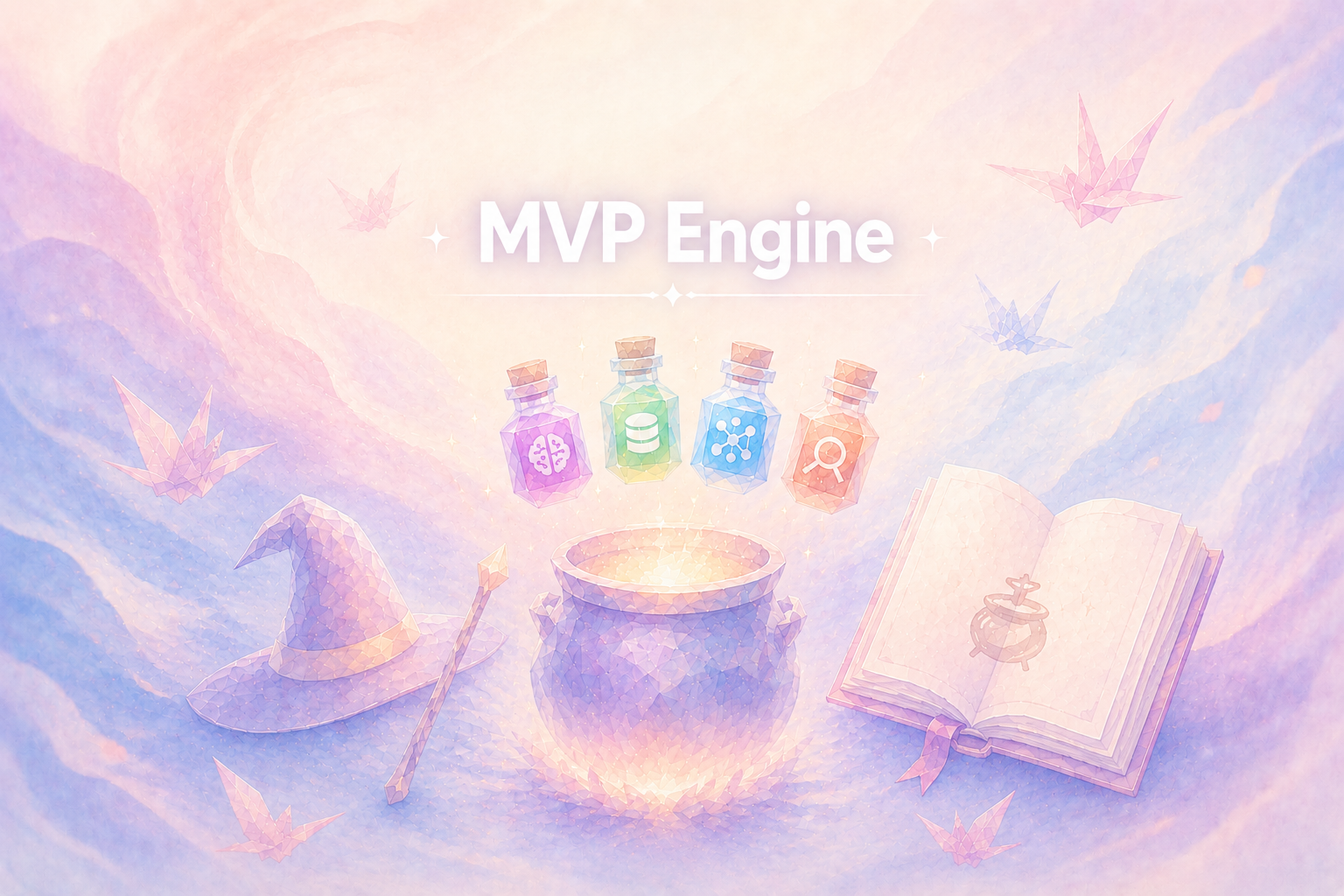
MVP Engine is a lightweight training engine for multimodal model research.
Its design starts from a blunt preference: avoid over-abstraction.
Most training frameworks become complicated because they try to support every model family, data format, parallel strategy, optimizer, scheduler, and training trick through one reusable API surface. That pressure is real. The cost is also real: simple experiments become buried under config switches, adapters, hooks, registries, and indirection.
MVP Engine takes a narrower stance. The stable core lives in mvp_engine/.
Experiment-specific model, data, optimizer, scheduler, and training logic live
in recipes/. Reusable patterns that are not truly core infrastructure live in
skills/, where a coding agent can apply them directly to the target recipe.
That split is the interesting part. Instead of forcing every variation into the engine, MVP Engine treats the recipe as the place where concrete training code should remain visible. Skills provide agent-facing instructions for recurring patterns such as parallelism, gradient checkpointing, freeze policies, packing, loss guards, debugging, and migration steps. The agent uses those instructions to edit the recipe itself.
The result is a training stack with three layers:
mvp_engine/for launch, config merge, distributed setup, logging, checkpointing, and the base training looprecipes/for experiment-specific model, data, config, and training logicskills/for reusable coding-agent instructions that customize recipes
The core engine is intentionally ordinary. The base Engine workflow follows
before_train -> do_train -> after_train, while subclasses implement
preparation methods and step hooks such as train_pre_step and forward_step.
Hydra handles config merging, and mvp_engine.launch launches train,
evaluate, or custom workflows.
That means a new experiment does not need to become a new global abstraction. It can be a recipe. If a recipe needs tensor parallelism, a freeze policy, data packing, or a debugging pattern, the coding agent can apply a skill and write explicit code into that recipe. The engine remains boring; the experiment stays readable.
This is a good fit for multimodal training because multimodal work changes shape quickly. One model may need image-text packing. Another may need video tokens, document crops, special loss guards, or hardware-specific parallelism. A framework that tries to abstract all of that too early tends to become harder to reason about than the experiment itself.
The repository’s quickstart is also intentionally direct:
uv venv --python=3.12
source .venv/bin/activate
uv sync

torchrun --nproc_per_node=1 -m mvp_engine.launch \
  --config ./recipes/magic_transformer/configs/train.yaml
For builders, the broader idea is simple: keep orchestration stable, keep recipes concrete, and let agents operate at the level where the experiment actually lives. That is a different kind of training framework: less cathedral, more workshop.
Resources: